
Food Battle: Bacon vs. Breakfast Sausage
What is better, sausage or bacon?
When it comes to the battle of the breakfast meats, bacon vs. breakfast sausage, which team are you rooting for? When you take into account that 908 million pounds of bacon were sold in 2015, you might think that Team Bacon comes out on top. However, a 2016 Harris Poll conducted for the National Hot Dog and Sausage Council found that a majority of Americans, 89% of the respondents, favor sausage overall. The poll found a wide variety in the types of sausage that American diners prefer – Italian and patties tied for favorite among respondents at 20% each with breakfast links at 15% and bratwurst at 12%.

But let’s not diminish the role that bacon plays in our hearts and on the table. 2015 sales of the cured meat totaled $4.21 billion, according to the North American Meat Institute. This was a 5.4% year-over-year increase in sales. And in a survey conducted by pork supplier Smithfield, 65% of people said they would support a petition that declared bacon as America’s national food.
Going back to Team Sausage, from 2011 to 2016, sausage consumption in America steadily rose from 231.88 million consumers to 246.81 million, according to a 2016 Simmons Profile Report.
When it comes to the bacon vs. breakfast sausage battle, at The Original Pancake House in Denver we won’t choose sides because we love them both. We offer a number of delicious choices including honey cured bacon, turkey sausage, and our special recipe sausage patties and links. Visit us soon to taste them and pick a team if you dare!

Green Chile: The Darling of Denver Restaurants
Menus at Denver restaurants aren’t complete without this local favorite.
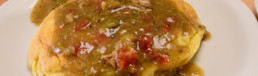
No matter what breakfast restaurant you go to anywhere in America, there are some dishes that will undoubtedly appear on every single menu. Pancakes, French toast, waffles, and omelettes, to name just a few. But every breakfast restaurant is bound to have a few signature dishes that are local or regional specialties. If you dine out at Denver restaurants, you know that you will find green chile on a lot of menus. Green chile (or chili) is a specialty of New Mexico, and by proximity, the Rocky Mountain region. No menu at Denver restaurants is complete without at least one item featuring this delicious, spicy concoction. If you've ever browsed green chile house photos online, you'll notice just how many local spots proudly showcase this dish bubbling in a pot or ladled generously over a plate. If you order huevos rancheros in green chile denver, you can bet the eggs will be smothered in green chile. As will your breakfast burrito. When you come to The Original Pancake House, you'll find it on top of the Green Chile Eggs Benedict, along with tomato, avocado, chorizo sausage and pepper jack cheese.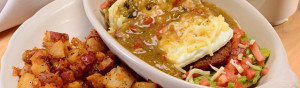
Chile peppers, both red and green, are a staple of New Mexican cuisine. While red chile in its sauce form is generally used for covering enchiladas, burritos and more, green chile is hearty and often doubles as both sauce and as a soup or stew. Chile peppers, which are technically a fruit, have been around for thousands of years. They were used by the Inca, Mayan and Aztec civilizations in both culinary and medicinal applications. It is generally believed that Columbus first encountered chiles in the Caribbean and the curious spicy pepper was brought back to Spain by the ships doctor Diego Alvarez Chanco, who first wrote of their medicinal properties in 1494.
Today chile peppers are a major industry in New Mexico and the Hatch Valley is renowned for its production of the Hatch chile, a hybrid of the Chile Negro, Chile Colorado and Chile Pasilla. It was created by horticulturist Fabian Garcia after 10 years of experimenting to find the perfect chile and was originally known as New Mexico Chile No. 9. Chile-heads around the globe owe Mr. Garcia a great deal of thanks, as do patrons of Denver restaurants when they dig into a bowl of green chile, or enjoy something smothered with the iconic sauce. Take a look through our green chile house photos gallery to see just how beloved this dish has become across the city. Yelp waitlist to skip the line!
Our Dutch Baby Makes a Delicious and Unique Breakfast
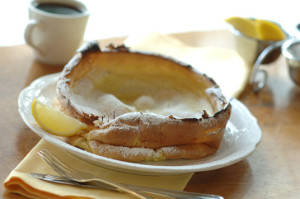 Have you tried our Dutch Baby Pancake before? If not, you have really been missing out! This dish isn’t your typical mini Dutch pancake. It is oven baked, rich and fluffy. We serve it with lemon, butter and powdered sugar. The mini Dutch pancake makes for a tasty breakfast that is just slightly off the beaten path.
The Dutch Baby, also known as a German Pancake, Bismarck or Dutch Puff, is more like a popover than a traditional pancake. It is a descendant of the German pancake called Pfannkuchen. A batter made with lots of eggs plus milk, flour, sugar, and vanilla is poured into a cast iron skillet that has been preheated in the oven. The Dutch Baby puffs up very tall like a soufflé when baked in the hot oven, then it falls when it is removed. The resulting dish is rich and eggy, almost custard-like in the center, with crispy brown edges. It is truly a culinary treat!
The Dutch Baby pancake is one of our specialties at The Original Pancake House. We like it served the traditional way but if you want to try making one at home you could dress it up many different ways. They are delicious with fresh fruit and fruit sauces, butter and maple syrup, peanut butter and jam, or yogurt and berries. You could even leave the sugar out of the batter and top your mini Dutch pancake with savory items like bacon and eggs.
Bread is the Foundation of the Breakfast Menu
Bread has been around for thousands of years and plays a major role on the breakfast menu.
Bread is an important part of the diet for people all around world. In America, breakfast menu bread is a fixture on tables everywhere. It is one of 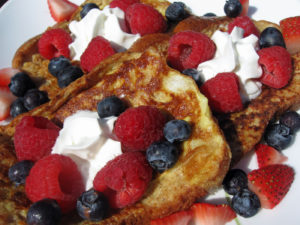 humanity’s oldest forms of prepared food. It is believed that bread started off as a simple dish made from extracting the starch from plants by pounding them and then spreading the starch on flat rocks that were then cooked over fires. When agriculture started to spread around 10,000 BC at the start of the Neolithic age, the cultivation of grains and the presence of natural wild yeast made bread an important staple. With just two main ingredients, flour and water, endless varieties of bread can be made.
Fast forward thousands of years to the creation of the modern restaurant and you'll see bread on the breakfast menu, and related baked items all over the menu, particularly at breakfast. Where would the breakfast menu be without bread? Can you imagine life without biscuits, pancakes, waffles and French toast?
Here's some fun breakfast bread facts to help you appreciate the hero of the breakfast menu.
- The automatic bread slicing machine was invented by Otto Rohwedder in 1928.
- The outside of the loaf is called the crust and bakers refer to the inside as the crumb.
- Americans consume on average 53 pounds of bread per year.
- Farmers receive approximately 5 cents (or less) from each loaf of bread sold.
- A single bushel of wheat will make 73 loaves (one pound each) of bread.
- The color of the twist-tie on loaves of bread designates which day of the week the bread was made. However, manufacturers use their own color code so no one color applies to every type available.
The Many Lives of the Pancake Breakfast
Flapjacks vs pancakes vs hotcakes…are they relatives of the pancake?
Pancakes are a very popular choice for breakfast all over the country. You’d probably have a hard time finding someone who doesn’t enjoy a short stack of fluffy pancakes, topped with butter and maple syrup. They’re equally delicious when served simply, or dressed up in many different ways.
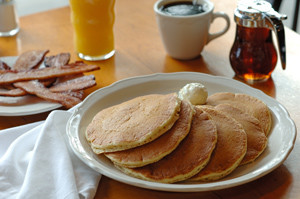 There are many different names for pancakes including flapjacks, griddlecakes and hotcakes. All of these other names for pancakes are the same basic ingredients and cooking method, they just may be called something different depending on region and the restaurant. Typically, in the U.S. flapjacks and pancakes are the same thing, the name is just used regionally. However, you may find some restaurants calling pancakes that are either a little smaller, or larger, than normal, “flapjacks.” Silver dollar pancakes are simply named for their size. In England, a flapjack is not a pancake at all, but a type of sweet bar cooking made from oats.”
A johnnycake is a small pancake made from cornmeal, salt and hot water or milk, rather than wheat flour. Johnnycakes were a staple item for early Americans and now they are very popular in New England, particularly Rhode Island. The South also makes this dish but it is called a hoecake.
Crepes, like those we serve at The Original Pancake House, are very thin pancakes made from flour, milk and eggs. They are very popular in France, Belgium and Switzerland and are served in a variety of ways, both sweet and savory.
Battle Breakfast Restaurants: Hash Browns vs Home Fries
Which do you prefer at breakfast restaurants, hash browns or home fries?
Potatoes show up on the menu at breakfast restaurants almost as much as eggs do. The potato is one of America’s favorite starches and we enjoy them at any time of the day. But potatoes go particularly well with breakfast and show up mostly in the form of hash browns or home fries, the two most popular sidekicks to your eggs.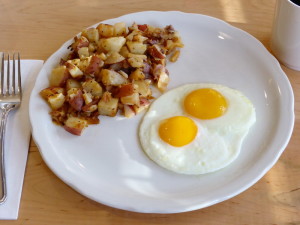
When it comes to the breakfast battle of hash browns vs home fries, let’s start with the difference between the two. Hash browns (or hashbrowns and hashed browns), are traditionally shredded potatoes that are pan fried to a golden brown. Home fries are made from cubed or diced potatoes. They are fried up along with onions and often bell peppers. Hash browns and home fries are staple items of breakfast restaurants around the country. The first known mention of “hashed browned potatoes” is by food author Maria Parloa in 1888. Over time the name was shortened to its current form.
At The Original Pancake House we prefer home fries because they have more texture as well as more flavor with the addition of onions and seasonings. We think they have a bit more personality and are more “homey” than the simple shreds of hash browns. They make a great side dish to many of our fantastic breakfast dishes.
Breakfast Restaurants are Serving Up Eggs
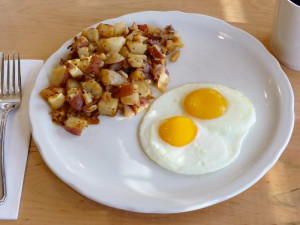 How many eggs are consumed in America? Keep reading to find out this and other egg statistics.
Eggs are a staple item at breakfast restaurants and in our homes as well. It’s really no mystery why. They’re the perfect source of complete protein and can be prepared in endless ways. So just how many eggs do you think are being prepared at breakfast restaurants in the United States? In 2015 an estimated 231 million cases of shell eggs were produced. Of that, a whopping 20.8 million cases went to the foodservice industry. That’s a lot of omelettes!
Here’s some more “eggstraordinary” facts about the egg industry.
- As of January 1, 2017 there were 372 million egg-laying chickens (“layers”) in the country.
- Of those 372 million layers, 314 million of them are for producing shell and table eggs.
- Iowa is the number one egg producing state in the country.
- When analyzing the cost of high-quality protein, eggs are the most affordable choice at 55 grams of protein per dollar spent. Compare this to 90% lean ground beef, which provides 16 grams of protein per dollar spent.
- In 2016 per capita consumption of eggs was estimated at 267.4 per person.
- The Guinness World Record for the largest omelette was set in 2012 by a group of Portuguese chefs. They used a total of 45,000 free range eggs to make it and and it tipped the scales at 9,702 pounds and 8 ounces.
The Star of Pancake House Menus Has a Long History
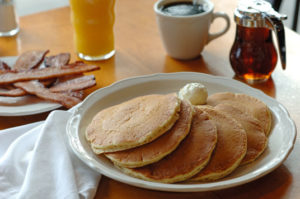 They may be the preferred item on pancake house menus, but people have been eating them since long before restaurants.
Pancakes have long been a favorite of the American breakfast table. You’d be hard pressed to find people who did not grow up enjoying the classic combination of pancakes and maple syrup. But what do you know about the history of the humble star of pancake house menus? You may be surprised to learn that pancakes are actually an ancient dish.
It is believed that the earliest pancakes may date as far back as the Stone Age. These ancient versions weren’t made with flour, but more likely from ground up starchy vegetation that was mixed with water and cooked on a hot stone. This practice of making flat cakes from some form of grain or starch continued throughout history. The ancient Greeks made a version from wheat flour, olive oil and curdled milk. They were sweetened with honey and eaten for breakfast. Another Greek version was made with spelt flour and topped with honey, sesame and cheese.
The modern American pancake evolved from the hoe cakes and johnnycakes of Colonial times. These were made from cornmeal or buckwheat. The first recipes were published in the 1796 cookbook American Cookery by Amelia Simmons.
Today pancakes of all varieties are found in America and many other countries all around the world. They are, of course, still the star of all of The Original Pancake House menus, made from our signature sourdough starter. This gives them the light and airy texture they are known for. Come celebrate culinary history with us any day of the week!
Eat the Best Breakfast for Weight Loss in 2017
If you’re trying to lose weight, you might want to consider these healthy breakfast ideas for weight loss.
Did you make a New Year’s resolution to eat right and lose weight in 2017? If so, you’re in good company. According to 2015 research reported by Statistic Brain, 45% of Americans usually do make a New Year's resolution and losing weight comes in number one on the top ten list of the most popular. If you’re on a mission to drop some pounds, you really want to make sure you eat the best breakfast for weight loss in 2017.
Here are some healthy items you’ll want to be sure to include in your best breakfast to keep you fueled for the day.
Raspberries – Just one cup contains 8 grams a fiber. Recent research in the Journal of Nutrition suggests eating more fiber can help prevent weight gain or encourage weight loss. Researchers found during the two-year study that increasing fiber by 8 grams for every 1,000 calories resulted in about 4 ½ pounds of weight lost. Pro-tip: put those raspberries on top of a bowl of oatmeal for added fiber and slow-release carbohydrates that won’t spike your insulin.
Yogurt – A Harvard report that was published in the New England Journal of Medicine listed yogurt as one of the top five foods that promote weight loss. Research shows that this high protein choice can help you lose weight and gain lean muscle mass. Be sure to choose low fat and low sugar options, such as non-fat plain Greek yogurt. Pump up the flavor with fresh fruit, like raspberries.
Eggs – They’re packed with protein and will help keep you full until your next meal. Besides that, eggs make for the best breakfast because they can be prepared in endless variations so you won’t get bored.
What are Millennials Eating at Breakfast Restaurants?
Studies show Millennials pick more adventurous options at breakfast restaurants.
 People say a lot about the Millennial generation days, including that they love adventure. And according to research by Datassential, that translates to their choices at breakfast restaurants as well. In a survey of 1,280 consumers, Millennials were more interested in innovated new breakfast ideas than other age groups. This includes healthy options and ethnic choices. So what do millennials eat for breakfast? The answer, it turns out, is anything but boring.
What specifically interests Millennials at breakfast restaurants? The survey found that 65% would choose elevated comfort food options. This includes things like biscuits and gravy made in “premium” versions. 63% of respondents said they were interested in breakfast sandwiches in either “monster” or mini options, a trend that has become a defining feature of millennials breakfast habits.
So what aren’t Millennials eating for breakfast? Well, cereal most notably. In February, the New York Times reported in a story about breakfast cereal that research showed 40% of Millennials said cereal was an inconvenient choice because they had to clean up after. While this generation is most likely to skip breakfast all together, when they do eat, it’s in breakfast restaurants rather than at home. They also prefer to eat breakfast options outside of the traditional hours. About 16% of the participants in the Datassential survey said they breakfast items as an afternoon snack. They also enjoy eating breakfast for dinner, another quirk that makes the typical millennial breakfast look quite different from previous generations.
Different Types of Breakfast Around the World
Pancakes and eggs may reign supreme at breakfast restaurants in Denver, but what’s cooking around the world?
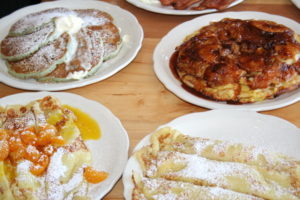 If you dine at local breakfast restaurants like The Original Pancake House, you’ll likely find the classics. Bacon and eggs, omelets, pancakes, French toast and waffles. But what about breakfast restaurants in other countries? What are people eating around the world?
In European countries, such as Spain, France and Italy, breakfast primarily consists of coffee and a pastry. In England they’re enjoying what is usually referred to as “full English breakfast.” This consists of bacon and eggs, sausages, grilled tomato, fried mushrooms, toast with butter and jam, and tea. It may sometimes include beans and the sausages can be Black Pudding, which is made with pigs’ blood.
In Brazil, they enjoy strong coffee with bread, ham and cheese. In Columbia, they eat arepas, a thick corn cake. These are usually split open and filled with many types of ingredients and enjoyed all day. But at breakfast they are most often served simply with butter and jam, or with eggs and meat.
If you dine at breakfast restaurants in Germany, you’re likely to be served a selection of breads with butter and jam, cold meats and cheese. In Japan, the morning meal can include rice, miso soup, fish, pickled vegetables and a type of omelet tamagoyaki. And if you eat breakfast in Jamaica, you’ll enjoy ackee, a type of fruit that is served cooked, along with salted fish, fried plantains and fresh fruit.
Are the Best Breakfast Places in Denver Locally Owned?
 When it comes to the best breakfast places in Denver, are they all locally owned? Do you think that there are any chain restaurants that make the list? Denver is a city where people really appreciate locally owned businesses and locally sourced ingredients. We know that supporting our local economy is very important. So when you look for the lists of the best breakfast places in Denver, it only makes sense that a lot of those places are locally owned.
Of course you can get a fantastic breakfast at many chain restaurants. Just because an establishment is corporately owned doesn’t mean that they don’t do a great job. In fact, the state of Colorado has seen the birth of several different restaurants that went on to become successful national chains. And besides this, it's good that people have a lot of choices.
The Original Pancake House is a homegrown family business from Portland, Oregon that grew to be a successful national franchise. As a locally owned Denver breakfast favorite, both of our Denver locations are owned and operated by the great niece of the franchise co-founder. We’re proud to carry on the tradition our great food and warm hospitality (and of course our fantastic pancakes) in Colorado. We’d love to have you join us for breakfast soon!